-
What types of construction projects does Channel Partners handle?
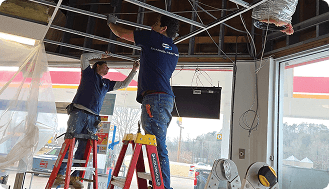
We specialize in commercial interior remodels and tenant improvement fitouts including general trades and MEP. We work across retail, grocery, medical, and convenience environments, handling everything from demolition through final closeout. We do not do ground-up construction.
-
Do you handle both general trades and MEP on the same project?
Yes. We self-perform general trades and coordinate in-market MEP (mechanical, electrical, and plumbing) under a single PM and a single contract. Clients get one point of contact for both, which eliminates the coordination gaps that cause delays and budget overruns.
-
Can you work in occupied retail or grocery stores during construction?
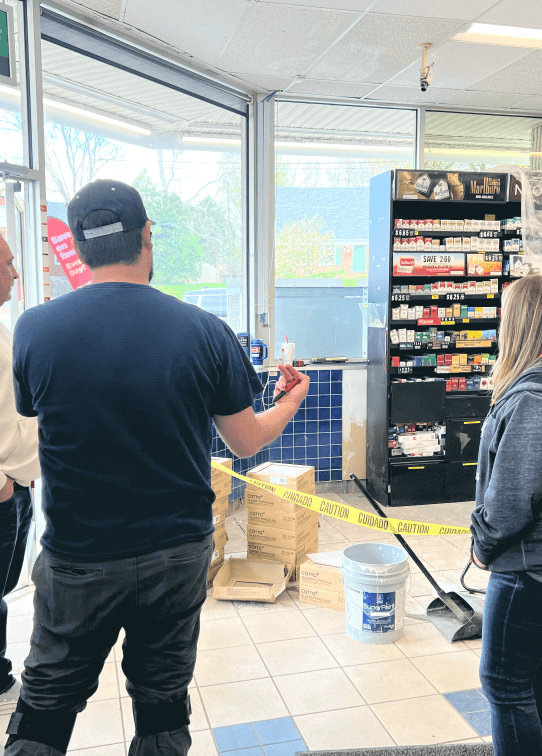
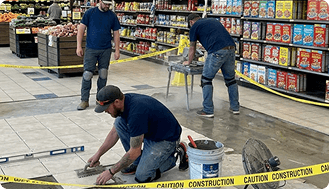
Yes. We're built specifically for occupied and partially occupied commercial spaces. We've coordinated active retail, grocery, and convenience remodels where the space needed to remain 75% or more operational throughout construction. Phasing, scheduling, and operational continuity are part of our standard scope.
-
Do you handle permitting?
Yes. Projects requiring permits (typically those involving electrical, plumbing, or wall moves) are managed by our pre-construction team. If a client doesn't have an architect or engineer engaged yet, we can contract one on their behalf to produce the required drawings.
-
Are you licensed to work on healthcare construction projects?
Yes. Channel Partners Solutions holds HCC (Health Care Constructor) accreditation, which qualifies us for higher-complexity and regulated medical construction environments. Healthcare construction is a particular area of strength for our team.
-
How do you handle construction in markets where you don't have a local office?
General trade crews are mobile and deploy coast to coast from a centralized national network. MEP (mechanical, electrical, and plumbing) is always sourced from in-market specialists in the local jurisdiction. This ensures local code knowledge, inspector familiarity, and no permit delays from out-of-state crews learning on your project.
-
What is Project Center?
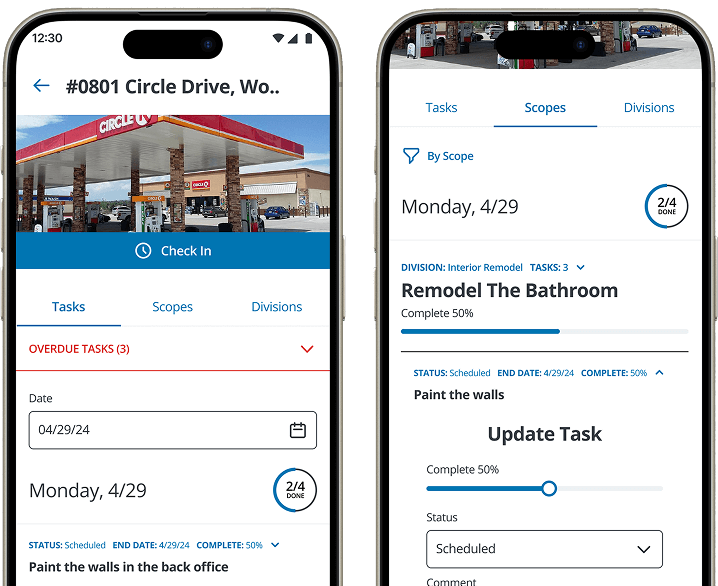
Project Center is our proprietary construction management platform. Crews log real-time progress and field photos from mobile devices throughout the project. Both our team and the client have live visibility into completion status so issues get caught in the field, not at the punch list.
-
What do I need to provide to get an estimate?
We can scope from drawings and a full SOW, an RFP, or a simple CAD layout showing existing versus desired state. For trusted clients, even a one-pager can be enough to start. You don't need complete drawings to begin the conversation.
-
What's included in your project closeout package?
Final inspections, permit closures, trade warranties, and an as-built binder delivered to the client. For larger MEP scopes, the engineer of record walks the punch list and serves as an independent gatekeeper before closeout.
-
What's the difference between a grey box and white box?
A grey box space has electrical present but not distributed, tempered conditions, and mainline plumbing only, typically no finished floor. A white box has drywall, duct distribution, labeled egress, and a finished floor in place, and is ready for tenant improvement buildout. We handle fitouts from either starting point.
-
What are retail construction services, and when should you use them?
Retail construction services are end-to-end field execution for improving, reconfiguring, or refreshing existing retail spaces without disrupting revenue more than necessary. They typically include demolition, carpentry, finishes, coordinated MEP work, and closeout documentation. The key value is disciplined scheduling, phasing, and quality control in active environments. They’re most useful when you need consistent execution across multiple locations or tight store operating constraints.
-
What’s included in store remodel services for an occupied location?
Store remodel services are structured remodel scopes delivered in phases so the store can remain open or partially open during work. They commonly include selective demo, wall/ceiling modifications, flooring, painting, fixture moves, and coordinated electrical/low-voltage changes. The work plan is built around safety separations, noise/dust control, and clear “open-for-business” pathways. A good remodel plan also defines what must be completed before merchandising teams can safely reset product.
-
How do you minimize downtime during store remodel services?
Minimizing downtime during store remodel services starts with a phased schedule that protects selling zones while work progresses behind barriers. Night and weekend work is used when it reduces customer impact or supports critical cutovers. Crews sequence disruptive tasks (flooring, power shutdowns, overhead work) into tightly managed windows. Clear daily goals, photo-verified progress, and rapid punch-list closure keep the project from “dragging” past the intended reopening plan.
-
What is store fixture installation, and what makes it “done right”?
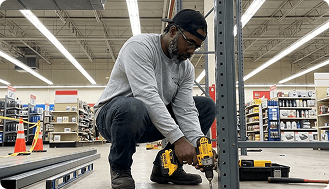
Store fixture installation is the on-site assembly, anchoring, leveling, and positioning of retail fixtures so they’re safe, compliant, and aligned to the intended layout. Done right means fixtures are installed to manufacturer specs, secured properly to structure where required, and aligned for a clean sightline and shopping flow. It also includes verifying clearances (ADA/egress), correcting field conditions, and documenting completion for sign-off. Proper fixture installation reduces rework during merchandising resets.
-
Do you coordinate store fixture installation with electrical and low-voltage requirements?
Yes—store fixture installation often requires coordination with electrical and low-voltage for powered fixtures, lighting, digital displays, and specialty equipment. The field plan should identify which fixtures need power/data before the install team arrives. Coordination prevents “fixture first, power later” rework that wastes labor and delays opening. The best approach is a sequenced plan that aligns rough-in, device set, fixture placement, and final test/commissioning.
-
What are retail installation services, and how are they different from general construction?
Retail installation services are specialized on-site execution tasks—fixtures, signage, graphics, displays, and equipment set—focused on getting a store customer-ready. Unlike broader construction scopes, installation work is typically faster-cycle, detail-heavy, and tied to brand standards and plan sets. It often includes punch-driven completion, photo documentation, and tight coordination with store operations. Retail installation services are commonly used for refreshes, rebrands, and multi-site programs.
-
What does retail signage installation typically involve?
Retail signage installation is the mounting, connection, and verification of signage elements so they are safe, code-compliant, and brand-accurate. It may include exterior and interior signs, wayfinding, wall graphics, and illuminated components. A proper install includes confirming locations, anchoring methods, power requirements (if illuminated), and final alignment/leveling. The closeout should document sign placement and any field modifications for consistency across locations.
-
How do you manage retail signage installation when lead times or site conditions change?
Managing retail signage installation under shifting conditions requires a plan that separates “site readiness” from “sign readiness.” If signage is delayed, teams can still complete blocking-and-tackling work (blocking, backing, electrical prep, wall finishes) to avoid idle time later. If a site condition changes (wall type, structure, access), installers adjust anchoring methods and document the change for approval. This approach keeps openings on track without sacrificing safety or appearance standards.
-
What are retail rollout services for multi-location programs?
Retail rollout services are repeatable, multi-site execution programs that deliver the same scope and brand standard across many locations on a defined schedule. They package scoping, scheduling, field labor, reporting, and QA so every site is completed consistently. The goal is standardization: same build, same install, same documentation—regardless of market. Strong rollout services also include exception handling for site-specific constraints without breaking the core program model.
-
How do you keep retail rollout services consistent across different regions and store formats?
Consistency in retail rollout services comes from standardized playbooks, checklists, and defined acceptance criteria for every workstream. Field teams execute against the same scope language, drawings, and install standards, while project management tracks milestones and exceptions. Photo verification and issue logs create accountability and reduce subjective “done-ness.” When store formats differ, the program should define controlled variations rather than ad-hoc field decisions.
-
How do you control change orders and protect budget during retail construction services?
Controlling change orders in retail construction services starts with clear scope definitions, assumptions, and allowances before mobilization. When field conditions require changes, the team should document the issue immediately, propose options, and get written approval before proceeding. A structured change-order workflow keeps cost impacts visible and prevents surprises at closeout. The practical goal is to keep decisions timely so schedule doesn’t slip while approvals stall.
-
What safety and customer-protection practices matter most in occupied retail work?
In occupied work, safety is proven through physical separation, controlled access, housekeeping, and documented daily readiness checks. Dust/noise control, safe material staging, and clearly maintained egress paths protect both customers and staff. Tool and ladder management, overhead work protocols, and signage/barriers reduce incident risk. A consistent safety routine also prevents operational disruptions that can derail schedule.
-
When are retail installation services the right solution versus a full remodel?
Retail installation services are the right solution when the space is structurally sound and you primarily need fixtures, signage, graphics, or equipment updates to match a new plan or brand standard. They’re ideal for refreshes, resets, and rollouts where speed and repeatability matter more than major construction changes. If you need wall moves, significant MEP reroutes, or major finish replacement across the store, you’re typically closer to a remodel scope. Many programs blend both—construction to prep the space, then installation to make it customer-ready.