


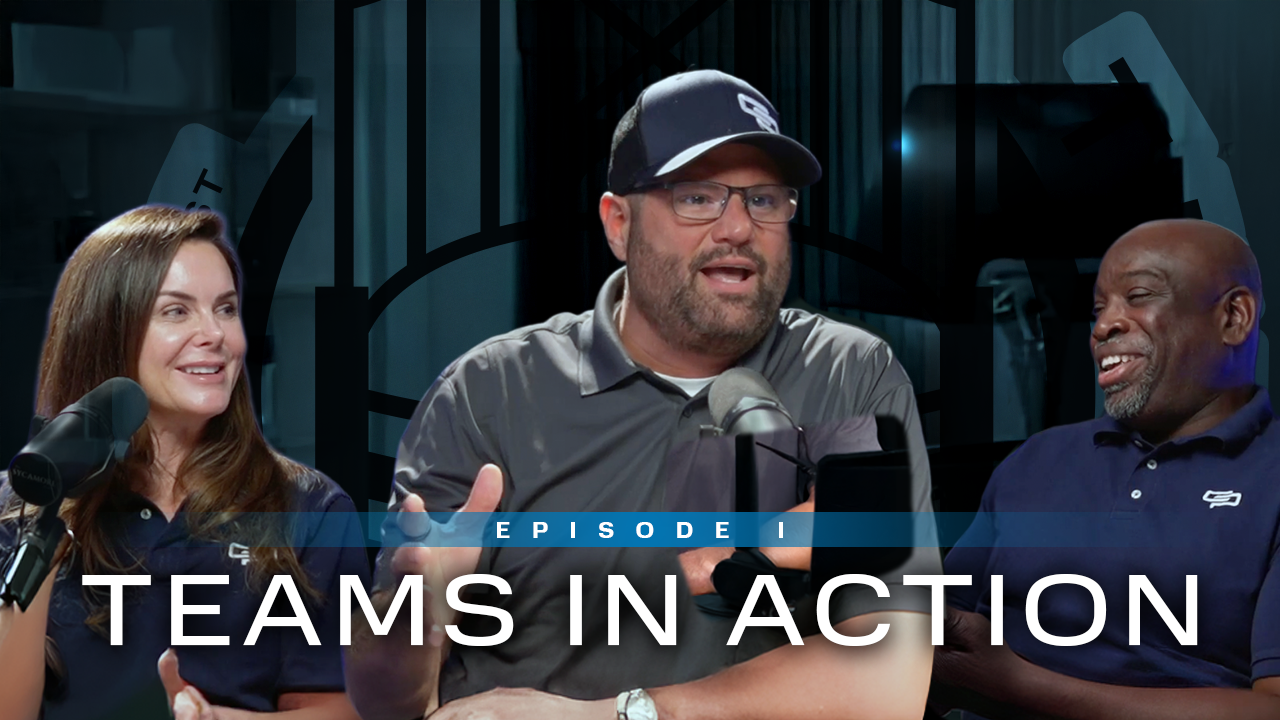
TEAMS in Action: Channel Partners Launches “The Bridge” Podcast Focused on Retail Execution Excellence
The Bridge Podcast | Episode 1
Channel Partners launched its podcast, The Bridge, with a clear message to our teams: core values are not optional. They are operational.
The first episode centers on the company’s TEAMS values: Transparency, Empowerment, Accountability, Mastery, and Simplicity. They walked through how those principles guide daily work in field merchandising, retail execution, retail installation, and assisted sales, experiential, and more..
“Welcome to the Bridge, your playbook for thriving in the field,” said Jimmy Knight, co-host and longtime field leader. “In today’s episode, we’re gonna be talking about our core values. This is the backbone in how we operate daily.”
The podcast is designed to strengthen communication between headquarters and field teams working across merchandising resets, assisted sales programs, break fix services and retail construction projects nationwide. It also serves as a peek inside our company culture, serving as a valuable tool for potential employees and clients.
A Modern Communication Channel for Retail Field Teams
Chief Operating Officer, Andrew Catapano, described the podcast as a direct link between corporate leadership and field execution teams. “Our purpose here is simple,” Catapano said. “We’re here to create a two-way connection… from headquarters to the field and then back again.”
In industries like retail execution and retail construction, where teams are dispersed across stores, cities and regions, communication gaps can slow performance and impact customer relationships. The Bridge aims to reduce those gaps.
Heather Petrone, Director of Internal Communications, said the format reflects how modern retail teams prefer to receive information. “We don’t want to read emails anymore, it seems like,” Petrone said. She described the podcast as “a more modern on demand platform” that employees can listen to between store visits or during travel.
For new hires in field merchandising or assisted sales, the podcast also serves as a training reinforcement tool. “If you’re new, you’re gonna be tuning in…so that you can hear real stories from the field,” Petrone said.
Knight said his role is to ensure the discussion reflects real-world field conditions. “I’m a bridge to the field,” Knight said. “Been there. Done it and still doing it.”
Core Values as an Operating System for Retail Execution
The episode establishes the TEAMs framework as the standard behind all merchandising, installation and sales activity. The five values are:
- Transparency
- Empowerment
- Accountability
- Mastery
- Simplicity
Catapano positioned them as business principles that directly affect retail performance. “From the CEO down…strong unity of team is what we’re all about,” he said.
For teams executing planogram resets, fixture installations, retail construction build-outs or assisted sales programs, values determine how work is delivered inside the store. They affect:
- Store manager relationships
- Client communication
- On-site problem-solving
- Reporting accuracy
- Long-term partnership trust
Transparency: Proactive Communication in Retail Environments
The first value discussed is Transparency, and Catapano drew a distinction that applies directly to retail operations. “Honesty… is when you’re asked a question, you answer it honestly,” he said. “Transparency is about being proactive in your communications.”
In assisted sales and merchandising roles, transparency can mean:
- Alerting leadership to scope changes early
- Communicating timeline shifts before escalation
- Flagging material shortages immediately
- Sharing store-level feedback that affects future execution
Knight emphasized that transparency builds trust, particularly in high-visibility retail environments. “Being transparent is not just about being honest,” Knight said. “It’s about being open about the whole situation.”
For retail construction and installation teams, that proactive communication prevents rework, protects client relationships and supports smoother execution cycles.
CEO Jim Fulk Reinforces Field-First leadership
Midway through the episode, CEO Jim Fulk joined the discussion and reinforced the company’s field-first philosophy. “I came from the field,” Fulk said. “I understand what our field does.”
Fulk shared his early experience working in retail resets, from cosmetics merchandising to structural installations in big-box stores. He emphasized that leadership decisions must reflect the realities of field execution. “Being transparent, being honest with people, being just genuine… you can’t be afraid of that,” Fulk said.
Fulk’s career progression from field technician to executive underscores the company’s emphasis on career mobility within retail services. “If you look at this like it’s your own business… you will accelerate through the organization and in your life,” Fulk said.
That mindset is critical in assisted sales programs and merchandising teams, where individual performance directly impacts store-level results.
Empowerment and Accountability in Assisted Sales and Merchandising
The discussion moved next to Empowerment, which Petrone defined as creating an environment where employees feel equipped and authorized to make decisions.
“We don’t want people sitting back and not feeling like they can come to a higher up and say, ‘Hey, this is what the situation is,’” she said.
In retail execution, empowerment allows field teams to:
- Adjust in-store displays when needed
- Escalate client concerns appropriately
- Recommend operational improvements
- Take ownership of project outcomes
However, empowerment without accountability weakens performance. Catapano addressed the balance directly. “With great power comes great responsibility,” he said.
Fulk added that accountability must be handled with professionalism and humility. “If you make a mistake, just say, ‘Hey, I made a mistake,’” Fulk said. “Don’t make that same mistake over and over again.”
Knight shared a practical example from a retail reset program where performance scores dipped due to lack of follow-through. Once the team lead owned the gap and corrected it, performance improved. “He owned it,” Knight said. “He was transparent… ‘It’s me. It’s not my team.’”
Fulk reinforced a leadership principle relevant to retail operations at scale. “If it’s wrong, I’m taking the heat. If it’s right, you get all the credit,” he said.
Mastery: Skill Development in Retail Construction and Execution
Mastery was framed as continuous skill development — not just maintaining current performance, but expanding capability.
For field merchandising and retail installation teams, mastery can include:
- Advanced planogram execution
- Fixture assembly expertise
- Retail construction compliance knowledge
- Assisted sales product training
- Technology integration in-store
Fulk said leadership development also requires learning from those around you. “I’m not the smartest guy in the room ever,” he said. “If I am, I’m the wrong person for this job.”
Petrone highlighted internal training resources available to field teams, including digital learning tools that support onboarding and technical development.
As Channel Partners integrates divisions such as merchandising, retail construction and assisted sales under a more unified structure, Fulk noted that mobility between service lines will increase.
“You can learn how to install TVs… develop more skills to become better at the overall retail environment,” Fulk said. That cross-training strengthens both individual career growth and overall retail execution capability.
Simplicity: Reducing Friction in Retail Execution Processes
Fulk spoke most emphatically about Simplicity. As organizations grow, process layers often increase. In retail services, excessive processes can slow onboarding, reporting and store-level execution. “We create more processes than need to be,” Fulk said. “You cannot overprocess things to make it hard on our people that are actually doing the work.”
He referenced the importance of simplifying documentation, reporting systems and onboarding workflows. “You can’t send engineered drawings to an installer,” Fulk said. “They’re just not going to read ’em.”
For retail construction and installation teams, clarity in documentation is directly tied to speed and accuracy.
Simplified processes support:
- Faster onboarding for new merchandisers
- Quicker reporting turnaround
- Clearer scope communication
- Improved client satisfaction
- Reduced rework
“We’ve gotta simplify every process,” Fulk said.
A Strategic Foundation for Retail Performance
Episode 1 of The Bridge establishes more than a podcast. It outlines a leadership approach that ties values directly to performance in assisted sales, field merchandising, retail construction and retail execution.
The message is consistent:
- Be transparent.
- Empower your teams.
- Hold yourself accountable.
- Pursue mastery.
- Keep processes simple.
“We’re here to make people better,” Fulk said. “We’re not here just to give them direction. We’re here to make them better at their job.”
For a company operating at the intersection of merchandising, assisted sales and retail construction, that commitment is not cultural language. It is operational strategy.
Make sure to subscribe and tune in every month to The Bridge on YouTube or wherever you get your podcasts.
Want to join our team? View our open positions at https://channelpartners.com/careers/
Episode Transcript:
Jimmy Knight: [00:00:00] Welcome to the Bridge, your Playbook for Thriving in the Field. In today’s episode, we’re gonna be talking about our core values. This is the backbone in how we operate daily.
Andrew Catapano: Welcome, welcome, welcome, channel, partners, uh, teams, associates, people around the country. And a special welcome to our first podcast, the Bridge to my co-host Miss Heather Patron. Hey, and Mr. Jimmy Knight.
Jimmy Knight: Hey
Andrew Catapano: How are you guys doing today?
Jimmy Knight: Excellent day.
Andrew Catapano: Awesome. This is, is exciting. It is exciting. Welcome, everybody listening to our very first episode of the Bridge.
Our, uh, purpose here is simple. Um, we’re here to create a two-way connection, right? Mm-hmm. From headquarters to the field and then back again. This is not just a, uh, a platform to give you news updates, expand, uh, on our bulletin [00:01:00] board of, of things coming up. This is about really sharing tips and tricks.
Stories. Mm-hmm. Uh, good. The bad, the ugly. We may get some updates from, from, uh, from, from the headquarters. We may get some updates from the field, but really this is about sharing best practice ideas, stories, and getting to know each other and making that connection between headquarters in the field. Uh, as I have said, I am Andrew Catano, your Chief Operating Officer and your host of the Bridge.
And with that, I’m gonna turn it over to a quick, uh, introduction to Miss Heather Patron, who’s gonna tell her who she is and why you’re here.
Heather Petrone: Yeah. Hey everybody. I’m Heather Patron and I am the director of Internal Communications. And I just wanna kind of be clear about why we’re doing this. Um, I think, you know,
Andrew Catapano: Because we’re bored and have nothing else to do.
Heather Petrone: Yes. We don’t have anything to do behind the scenes. It’s just, it’s terrible. No, uh, I mean, I think, I think. It comes to, uh, what work looks like today and how our culture is as a whole, like [00:02:00] society. Like we don’t want to read emails anymore, it seems like, right? Mm-hmm. I feel like a lot of people don’t wanna read things.
Yes. And so I think one of the big reasons why we kind of came up with this is, and, you know, maybe it’s something that people will like, maybe they won’t like it. Who knows? Like, hopefully we can make this whole concept podcast. You’re gonna love it, Heather. Entertaining. But I think it’s a way to communicate more information to the field, have the field be connected to us in a more modern, you know, more modern way.
Because, you know, everybody loves to listen to people talk nowadays instead of just like reading an email. People like to be connected on teams. They’re teams meetings. And I know not all the time we, we can’t have all the field connect on teams meetings. That’s right. And things like that. Right. So this is a more modern on demand platform that people can kind of tune in.
Hopefully, like if you’re new, you’re gonna be tuning in, listening to this podcast on your drive over so that you can hear real stories from the field. [00:03:00] Learn from other people’s mistakes, learn best practices. Love it. You know? Yep. And so this is why we’re, we’re doing this today. Yeah.
Andrew Catapano: Jimmy, why are you here?
Jimmy Knight: I like, you know what, I got a call.
Heather Petrone: Jimmy got suckered into this.
Jimmy Knight: Yeah. Uh, we, after, uh, you were just telling us we got talent, it was like, Hey, you know what? You were great. We need to bring you onto this podcast. Yeah. Get views and opinions. You’ve been around the block. Um, and pretty much you’re a
Heather Petrone: great connection to
Jimmy Knight: The field too. Yeah. I’m a bridge. Bridge to the field, right? Mm-hmm. Been there. Done it and still doing it. So, yeah.
Andrew Catapano: Most recently, uh, featured on our talent show, you know, he’s not an easy, he’s not an easy asset to get. Nowadays. Mm-hmm. You know, between you and your singing of the Voice of the Ocean or Unbelievable Pipes on this one. Yes.
Then I got Jimmy, who’s already, who’s already well into his career in broadcasting and ha, I’m the, I’m the least asset in here. Horrible. All [00:04:00] right. Anyway, I am glad to have, uh, all of you here. I’m gonna open this one with a dad joke, if you don’t mind for everybody. Let’s, let’s go, which is one of my favorites.
Okay? Okay. ’cause I do have a 7-year-old, so there’s a lot of, uh, proud, proud pop of one 7-year-old. Why didn’t the apple finish crossing the road?
Heather Petrone: No idea. ‘
Andrew Catapano: Cause he ran outta juice.
Heather Petrone: You’re, this is like my dad. My dad would tell a joke like that.
Andrew Catapano: Fantastic.
Heather Petrone: Yes, Heather. Fantastic. I love a good corny joke.
Jimmy Knight: Yeah. That it was.
Andrew Catapano: Alright, next up,
Heather Petrone: Next up. Honesty
Heather Petrone: It’s transparent. Hey, transparent. We do not talk about our core values on this.
Andrew Catapano: All right, let’s get into it then.
Heather Petrone: This is, talk about transparency.
Jimmy Knight: Yeah.
Andrew Catapano: Yeah. Um, alright, so let’s, let’s dive into our core values as you’re, um, you know, one, one of your leaders, uh, here. Um, I do my best every day to try to practice and instill the core values of teams. [00:05:00] Um, which, uh, hopefully we all know at this point, but if we don’t, they are transparency. Empowerment, accountability, mastery and Simplicity.
Heather Petrone: Great acronym
Andrew Catapano: and yeah, it, it stands for teams and, uh, from the CEO Down, we believe that the team. That we have here, the people that we put out, uh, into the field and, and do the hard work at headquarters, that strong unity of team is what we’re all about.
Mm-hmm. And inside of that, in order to become the best team possible, you know, we, we like to kick it off with, it means. Being transparent. Mm-hmm. And let’s just start with that value if we could for a second, because I do think, and I wanna take a second, uh, because I’d like to do just a quick dive, not a deep one, into the difference of what I believe is transparency and honesty.
Uh, which sometimes we confuse the two and they’re both methods of communication. Honesty to me, and you guys can debate me on this if you want, is, is when you’re asked a question, you answer it honestly. [00:06:00] Right? Okay. Um, Heather, uh, why were you late today? We’re gonna ask that honestly. ’cause you’re late. All the, no, you’re always on time.
Jimmy’s usually early, but you’re late today. You give me an honest answer, right? Right. Yes. What’s your, what color is that shirt, Jimmy? It’s
Speaker 4: blue.
Andrew Catapano: It’s blue. Honest answer. You’re not gonna gimme dishonest answer. Transparency is about. Being proactive in your communications so that people can understand what may or may not be about to happen.
Not
Speaker 4: waiting. Not
Andrew Catapano: waiting. Not waiting. Yes. Thank you. So, you know, as we start and do it in into transparency, you know Jimmy, I know you and I talked before this first podcast, tell, gimme, gimme your take of, you know, not only why this open communication of transparency and honesty, but. What that does to drive trust.
I know you’re huge on that transparency, driving trust. Give me your take on transparency, what it means to be vulnerable and tr I know you’re, you’re outspoken on that. Yeah. So let’s talk about that first.
Jimmy Knight: You know, what being [00:07:00] transparent to, to be honest with you. Hey guys,
Speaker 4: speaking of transparency.
Andrew Catapano: Oh my,
Jimmy Knight: oh my goodness.
Speaker 4: Our CEOI get nothing. I get no notice. I get no notice. I just gotta walk in on this. Oh my
Andrew Catapano: gosh. Have a seat. Have a seat, uh, for those of you listening and, uh. Well, really you are here.
Speaker 4: I, I interrupted Jimmy’s answer. Should I be
Andrew Catapano: going? We did. No, that’s, that’s okay. We’re gonna get back to Jimmy in a second.
Uh, but, uh, we actually did not know you were coming. Thank you for coming today. This means a lot to us.
Speaker 4: Are you being transparent when you
Andrew Catapano: say I am being, I am being both transparent and honest. Our CEO Mr. James Folk is, uh, in the building and, uh, has given us. I’m a little bit, I, I have a little anxiety now.
I didn’t realize that was gonna happen. Now I’m all thrown off my game as he does all the time. Yes.
Speaker 4: And to be honest, I go by Jim, not James. Yes. So
Andrew Catapano: listen, get it updated in the iPhone, transparency and I’ll figure that out. Um, Jim, we are, [00:08:00] God, we’re thrown off. Alright. We’re gonna get through it. We’re gonna get through it.
Alright. Um, Mr. Folk, since you are here, um, let me shift gears. Catch my breath for a second. Tell us in, in transparency. I guess we’ll do this. Yeah. Talk about the core values. We’ll, we’ll do this, we’ll say. Tell us a little bit about you transparently. What brought you to this seat in the sense of your career?
What got you here? Where did you start? And for those that don’t know you, who is James Folk? Who is Jim Folk as he goes by?
Speaker 4: So first and foremost, I do not want to, uh, come in here and take over Jimmy’s thunder. So I know Jimmy was getting ready to answer a question. Let, let’s let Jimmy finish his question.
Fair enough. First. Alright, first. Okay.
Andrew Catapano: Alright,
Speaker 4: because I wanna make sure I’m prepped in the mind for the question you just asked me. I’ve gotta figure out if I wanna be transferred, if I wanna give you two truths in one lie.
Andrew Catapano: Oh boy. You
Speaker 4: figure it out.
Andrew Catapano: Oh. Alright. Well, Mr. Knight then frame it for us about transparency, building [00:09:00] trust and vulnerability.
What does that mean? And let’s. See if our CEO, Mr. Folk can practice it after your answer.
Jimmy Knight: All right, so in my mind, being transparent is just not about being honest, right? It’s about being open.
Andrew Catapano: Yep.
Jimmy Knight: About the whole situation. That’s rather if you, you’re late for work, the reason why you’re late for work, right?
You gotta be transparent, Hey, my car broke down. That way we understand it and, and being honest, right? Because being vulnerable is a trust value involved in that. So once you can be able to open up. Be transparent. Now you can have that trust, that one-on-one between your field manager, between your project manager.
It is, it’s one of those things in which if a project is going left, tell ’em exactly why it’s going left. You know what, I’m, I kind of messed up here.
Andrew Catapano: Mm-hmm.
Jimmy Knight: Right? And this is, these are the reasons why I messed up. So once you hit, once you’re transparent, you build that bridge.
Andrew Catapano: Yep.
Jimmy Knight: To trust.
Andrew Catapano: No. And, and, and I, and I’m gonna turn it back over to Mr.
Folk. And I know we’re gonna talk in episode two about what it means to be vulnerable, [00:10:00] you know, and, and get into some of those things. And I hope we do a deep dive into that. But you know, our, a lot of people listening right now. James, I’m gonna keep calling you James ’cause I know you go by Jim and it’s fun to do it.
Um, but, um. You are, and, and for those of you that don’t know, uh, I am not only a partner of Jim’s, um, but he is also a friend of mine and somebody who I’ve known now for what, 15 years.
Speaker 4: 15 long years feels like 45, 50.
Andrew Catapano: Yeah, it does.
Speaker 4: If you guys get to know Andrew, you’ll understand why I say that.
Andrew Catapano: That is fair.
Heather Petrone: He packs in a lot.
Andrew Catapano: He does. Yeah. But you are definitely one of the more, what you see is what you get individuals, you know, you’re, you’re, you’re t-shirt wearing sometimes a hat. Um, and you just get out there, you’re born of the field, you know what it’s like. Tell us a little bit about what it means in your, in your, in your, in your eye, in your mind, about your level of [00:11:00] transparency and honesty and how you build connections with people and, and why that trust and vulnerability is so important.
Speaker 4: Yeah. I just, I’ve always felt like, uh, being transparent, being honest with people, being just genuine. Not, uh, not going in and faking it is, is, you know, I go to a lot of client meetings and people ask me, how did you pull that off? You said some things that most people wouldn’t ever be able to say. It’s all about being genuine and being transparent.
People get to know who you are and they understand your personality, understand you. And, and you can’t be afraid of that. You have to just, you know, lean into it and say, you know, that is who I am. Yeah. I’m very transparent. I wanna make sure people understand I came from the field, I understand what our field does.
I understand what Jimmy goes through. I understand what our Walmart crews go through those when those are some tough crews that have to sit on the road for 12, 16 weeks at a time, and then they’re on the road for six months to a year, sometimes without going home. Right. They just go from store to store to store.
Mm-hmm. I understand that. Uh, when I got out of the, uh, military, I, I was looking for a job and didn’t know what I was gonna do. I got outta the military, I was looking for a job, and I was like, I don’t age me here. But [00:12:00] I was reading the paper, trying to, reading
Heather Petrone: what is that,
Speaker 4: trying to find a job. ’cause back in those days, they had classified ads where did have classified ads, where the jobs were.
And I, I was looking for a job and it said the headlines, do you like to travel? I was like, yeah, I like to travel. Uh, so I, I went and applied and I, I started working on the road and I was doing. Back in the day I was doing cosmetic resets, is what I started doing. What? Uh, and Kmart. They didn’t even know that.
Kmart stores.
Jimmy Knight: Oh my gosh. Wow. Kmart. Kmart.
Speaker 4: Wow. Oh, showing you age there A little bit. Then I got into a bunch of lows. Uh, so went from Kmarts to going and putting up steel in lows. So, you know, cosmetics to, yeah, to steel difference, kind of different things. Differe. So I worked on the road for about six months to a year, and then I, uh, ended up going into the office and becoming more of a project manager slash salesperson.
And about a year into that, I said, wait a minute. I need to go start my own company. Uh, just the, the, the company I was working for did not want to grow. They didn’t, they wanted to stay, stay. So I, so I went out and I left and started my own company. Mm-hmm. And one [00:13:00] of my things was just to be very honest, all the way through, I was honest with it all.
Um, didn’t have a, a dime to even start a company, not one penny. Uh, I actually, uh, had one of my clients, uh, call me up and say, Hey, Jim, will you, uh, help us out with this project? I said. I will, I can get the people. I don’t have the money,
Heather Petrone: right? Mm-hmm.
Speaker 4: Uh, so in, in full transparency, that, that, that client said, we’ve got you, Jim.
Mm-hmm. They wired me about a million dollars the next day.
Heather Petrone: Wow.
Speaker 4: I was able to get everybody deployed and actually start my company. That’s how I started my, my first company. Amazing. In this industry. Amazing. So, you know, I, I grew up, uh, from a very, very poor, uh, part of, uh, Ohio, Southern part of Ohio. That, that there’s not a lot of, uh, jobs there, things like that.
So, you know, I didn’t come with a silver spoon in my mouth. Mm-hmm. I had to figure this out on my own. Right. And, you know, I have a lot of respect for the people that do that. I have a lot of respect for the people in the field that actually get out there and work and hustle hard because it is, it’s not an easy life.
And, and I, you know, I believe that is the heartbeat of our company. Mm-hmm. And I wanna make sure that we as. [00:14:00] You know, corporate staff, you know, Jimmy’s part of the field, but we as corporate staff, we, we recognize that and we understand without that field, we don’t have a company, right? Mm-hmm. That is the heartbeat of our company.
Andrew Catapano: You know, as we have you here, and we’re talking about transparency and honesty and communication, you know what? From your level. Sometimes people feel like you’re in your level or you’ve got nothing to worry about anymore. You’ve already done it, you’ve accomplished it, you’ve been there. And we try to tie that back to, come on guys.
I came, I had to put my pants on. Same way you did Two leg, two, one leg at a time. What counselor advice can you give to, to anybody out in the field, whether it be a new person, whether they be an existing person, it says. You know, here’s what I want you to carry from my legacy. Here’s what I want. Anyone out there listening to understand there’s nothing off the table here at the bridge.
Um, give us some of your insights. ’cause I’d, I’d even like to hear ’em.
Speaker 4: Yeah. I think first and foremost is, you know, nobody’s better than anybody else. They, they, they’re just not, uh, you know, we all. I treat [00:15:00] everybody, no matter who they are, the same, uh, you know, I don’t look at who has money, who doesn’t have money.
I’m gonna treat you the same no matter what. Right? Mm-hmm. I actually have more respect for individuals that are out there working hard and really, you know, driving versus the ones that were given stuff that were actually handed. You know, I, I, the only thing I can say is continue to work hard, drive your businesses, you know, drive it like it’s your own business.
If you, if you look at this like it’s your own business and you start to look at this and you work. Like you own the business, you will accelerate through the organization and in your life. Mm-hmm. Because it is very important that, that, you know, people will take recognize and they’ll notice the things that you are doing and say, wait a minute, I want that person on my team.
Right. I want that to be a part of me.
Heather Petrone: Mm-hmm.
Speaker 4: Uh, so just, you know, go in and, and, and work hard. And
Heather Petrone: take ownership.
Speaker 4: Take ownership. Yeah. ’cause you know, in all honesty, the company is all of ours. It’s not just one person’s company. It’s not just, you know, as the CEO. It’s not just me that. Drives the company.
You guys are the ones that drive it, right? I’m just steering the ship, making sure that we’re going in the right direction. I’m giving the vision saying, Hey, let’s go in this direction. [00:16:00] I sometimes. In full transparency, I give bad direction sometime. Mm-hmm. I, I, I truly do. There’s, you know, but what we’re gonna do is we’re gonna course correct when we have a bad decision, right?
Mm-hmm. Uh, that’s just part of it, you know? No, I was in the military as a lot of, you probably were in the military, in the field, some of you guys. Uh, some of our corporate staff, you know, as you know, when you make a plan, a plan is nothing but a, a set up for change. That’s all it is. A plan is a, a process for change is all it is, because you gotta be ready to change,
Heather Petrone: right?
And that’s part of, like, I think we, we need to talk about empowerment too, right? Mm-hmm. It’s another core value of ours. So when you do take ownership of something, if something seems off, like you need to feel empowered to say something. You know, we don’t want people sitting back and like not feeling like they can come to a higher up and saying, Hey.
This is what the situation is. I don’t think this is working out. This is my advice. What do you think about this? And that comes again, that’s transparency. Mm-hmm. But that’s also taking ownership and you know, and feeling empowered enough. Yes. To go to [00:17:00] leadership, to, to say when something feels off, you know?
Um, and you know, there’s, there’s two parts of empowerment, I think, right? There’s empowerment, like you need to feel empowered enough to take ownership of a project or ownership of your job to do it well. But then there’s also like managers, right? Need to empower their employees to make them feel equipped enough with the resources that they have, and hopefully we’re doing a good job of that, right?
We’re, you know, providing you the resources, the tools, the training to go out there and do your job well.
Andrew Catapano: Yeah,
Jimmy Knight: I agree.
Andrew Catapano: I have, you know, it’s interesting you say that Heather, and now that you know Jim is here, I want to include him in this conversation. ’cause I love the way our values flow, right? So you’ve got transparency, which means being vulnerable and communicating, and then you’ve got owning that empowerment.
Um, and, and then having the tools and resources you need to do your job, getting the information you need to be successful. But I think what people forget is that third value, and I think I remember what was the old, uh, Spider-Man movie with great power comes great [00:18:00] responsibility. Yes. Right. So once you have that power, be prepared to be accountable for exercising it.
Yeah. So Jim, my, my question is to you, you know, I know that you’re up against some different things. Do you got. I’m putting you on the spot. You got any kind of real world example for our, for our field here, where you, you own the empowerment, but I know you had all said, sometimes I get bad choices. What do you do when you have to then turn it over to accountability and own it?
You know, what’s your process there that says, you know what, this is how I’m gonna behave if I felt empowered and I got it wrong.
Speaker 4: Yeah. So first of all, empowerment. I, I truly believe, you know, we gotta empower our people to make decisions and to, to move the company forward. Uh, and then accountability.
There’s gotta be accountability with that empowerment. Uh, when you come back to the, the accountability portion, just stay humble. You know, if, if you make a mistake, just say, Hey, I made a mistake. Own up to your mistake and say, but I’m ready to course correct. And here’s what we can do. And learn from your mistake.
Don’t make that same mistake over and over again. Right. And, and that’s [00:19:00] one thing that you know, we have to get better at as an organization, Andrew, is, you know, I started this a year ago as CEO and I said, we’re gonna be transparent. I believe we have been transparent, but we’re not trickling it down all the way.
We’ve been transparent to certain individuals within our organization. Mm-hmm. But it’s not going all the way down to where it needs to, to our entire organization. So we need to change that. And I think what you guys are doing here today and the things you guys are building for this is really going to help that, but.
I’m a firm believer in being 100% transparent, empowering people to do their jobs, but also holding them accountable to doing their jobs. Right? So after this, what we’ll do is we’ll talk to you guys why you guys didn’t include me from the beginning in this, and we’ll hold you accountable. I
Speaker 6: wonder who’s accountable for that?
Speaker 4: No, uh, no. I do appreciate what you guys are doing. You know, Adam at a ball from the marketing team, Heather, the communications Andrew, you, you know, really the, the brainchild of all this, you and Heather and Adam trying to. Figure out how are we gonna communicate to our field, right? Mm-hmm. You guys are [00:20:00] empowered to do that.
That is what you guys are empowered to do. Let’s, let’s make sure that our entire team is able to understand why we are doing what we’re doing, how we’re making changes within the organization, what we’re doing to move the company forward. So they actually have career paths. So they understand, wait a minute, I wanna be a part of this company.
This company’s moving in the right direction. They’re moving where they need to go. Uh, because, you know, as everybody knows. If, if you just do the same thing day in and day out and day in and day out, you will no longer be relevant, right? So you have to change every three to six months. Doesn’t mean major changes, but you better be changing what’s going on.
Change
Heather Petrone: is the only thing that’s constant,
Speaker 4: right? That is correct. Yeah. So the, but you know, to answer your question short, is just stay humble. Stay humble. Yep. And, and really. Own up to your follow through. Yeah, own it. Own up to it. Yeah. Own it.
Andrew Catapano: Now what I will tell you too, and, and Jimmy, you can gimme an example of this, of how this might translate in the field.
So a as I started this podcast, um, well, as when Jim came in, I told you how close we were as friends, and then in our roles and responsibilities, a, CEO and [00:21:00] COO, we, we give the gift, and I’m gonna call it a gift of accountability to each other. Think about working out something. I, I have, I. I’ve done at some point in my life, I’m sure, but
Speaker 4: obviously I have not,
Andrew Catapano: I mean, I’ve a long seen a Jim, I think I, I’ve, I’ve had a membership at some point.
Speaker 4: Hey, I’m Jim.
Andrew Catapano: Jim, my go to right there. Good. I now have gone to Jim this morning.
Love the, um, but. Uh, some of you may not know this, but we’ll give you the, the transparency. Jim and I, I won’t say fight debate a lot
Speaker 4: heavily.
Andrew Catapano: We are each, we talk probably on the phone 20, 30 times a day. Um, literally things will pop into his head. Things will pop into my head, but we treat each and sometimes those conversations, uh, Jim has said, you know, how, you know, and I’m gonna be completely, you know, Andrew, why, why are you guess second guessing that right [00:22:00] now?
It’s too late. You know, and I’ll be like, well, Jim, I just want, that’s great. You should have said it earlier. Right. So, and then he’ll hold me accountable to the way in which I communicate, you know? And I think I’m holding him accountable, or he’ll come at me and be like, you know, he’ll say, but the great thing is, think about it, of not accountability as a punishment.
Think about accountability as a partner taking you to the gym in the morning.
Speaker 4: Mm-hmm.
Andrew Catapano: It’s a gift. Right? Right. I’m gonna, I’m so. I’m so, I’m so connected to you. I, I, I value your, your future so much. I value your mental, your physical, your professional and personal wellbeing so much. I’m going to hold you accountable to being the best version of you, you know how to be.
Speaker 4: Mm-hmm.
Andrew Catapano: And that’s where I think accountability for us really goes. And that’s why we can get through some of those debates. Yeah. That’s at our level. Right. Right, right, right. So that comes with professionalism to accept it. That comes with the ability to be genuinely honest and know the person’s not trying to attack you.
They’re trying to [00:23:00] help you in the field. Mm-hmm. What are some examples you think, Jimmy, of the way in which I just gave you an example of? The way in which we hold each other accountable. Mm-hmm. I’m, I call him and I’m ready for the good, bad, the ugly, you know, before I turn it back over to Jim here. How can someone do that in the field?
Jimmy Knight: So accountability and ownership, they, they come hand in hand. Once you fill in ownership of something, you feel as though that you’re accountable to make sure you do it right, because there’s a reflection of you. Um, we have a big box store that we, we do business with, uh, and I had a lead in the field. Um, they usually give you a score right on how you, how well you did.
You may have a hundred, 200 and something odd base that you have to complete. Um, so this lead at one point, nineties 92, a score was great. Then it dipped down into the seventies. So had to hold the conversation about accountability.
Heather Petrone: Mm-hmm.
Jimmy Knight: Right? And try to figure out why, why are we getting these scores when you’ve been consistent, right?
He had to be, he had to be [00:24:00] transparent and say, Hey, listen, I, I haven’t been really checking behind the guys. Mm-hmm. Got a newer team. I kind of trusted them that they were doing the right thing, but to be honest with you, the next one you’ll see a difference. Um, so he owned it, right? Mm-hmm. He was transparent with his communication.
It’s me. It’s not, it’s not my team. I’m not following up. Mm-hmm. So the next time he got a grade on his next location. He ended up with getting a hundred, right? Mm-hmm. He ended up, uh, as one of our core value winners.
Heather Petrone: Right.
Jimmy Knight: Um, because Great. He owned it. Yes. Yes. He, he definitely.
Andrew Catapano: What’s his individual’s name?
Can we give him a shout out? Or Wayne?
Jimmy Knight: Wayne Bush.
Andrew Catapano: Wayne Bush. Nice. Wayne Bush. Congratulations. Wayne Bush.
Heather Petrone: Yeah.
Andrew Catapano: Excellent
Heather Petrone: job. You get a lot of respect right when you do that too.
Andrew Catapano: Yeah.
Heather Petrone: Rather than just making excuses, you know, blaming. You know, your team or something. I, I, it’s, it’s always good to do it that way because you just gain more respect, I think from leadership and you know, your manager.
Speaker 4: So you not only gain it from your leadership and manager, you gain it from your team as well. True. You know, you, that you’re, you know, they [00:25:00] have, you have their back. That is a huge, huge, uh, you know, accolades there for him because, you know, if he’s just pointing the finger at the team, then
Heather Petrone: oh yeah,
Speaker 4: don’t turn against him.
Don’t turn against, but when, when you, as a leader, as I tell these guys all the time, you know. As I tell Andrew, Katie, you know, our CFO, our whole leadership team, when, you know, when we make decisions and if you make decisions, I’m gonna back your decision. Right? If it’s wrong, I’m taking the heat. If it’s right, you get all the credit.
Speaker 6: Mm-hmm.
Speaker 4: Uh, because, you know, as the, as the leader of the organization, I’m the one that has to face all the, the, you know, the fire across the board. If we do something wrong in our industry, but if we do something great, you give the credit to your team. That’s who did it. It wasn’t you as the leader, it was your team that did it.
Uh, you know, I was just in a store the other day and there’s one thing, Andrew, as you know. Um, and, and I think the whole leadership, our leadership team knows I’m really requiring our leadership to be in the field more,
Speaker 6: right?
Speaker 4: I want our executive leadership, a lot of our teams to be out in the field. I come from the field, I [00:26:00] care about the field.
I want to know what’s going on in our field. I wanna understand. How we hire, retain people, what we’re doing wrong to lose people,
Speaker 6: right.
Speaker 4: Things like that. How do we keep these people and what’s going to make them happy? You know, of course we can’t do everything everybody ask. That’s, that’s impossible. But we can’t hear the things, you know?
I was in the field the other day and I was talking to a gentleman, and I’ll leave names out because I haven’t talked to his leadership yet. Uh, but I was talking to a gentleman and I wanna make sure that, you know, I recognize. He brought some great points up. Hey, our training videos are lacking this, this, and this.
Yeah. We can’t get ahold of our manager a lot of times because you as leadership, Jim, have them on so many conference calls they can’t jump on with us. Right. So, you know, we’ve gotta learn from that and really figure out how we’re going to adjust to that so our team can really do what we need them to do.
And that’s be in front of our customers and really service our customers because that’s why we all have jobs, right?
Andrew Catapano: One before we switch gears to the next value. Jim, I got another question for you and, and Heather, please jump in too because I think you would have a. [00:27:00] I, I, I’ve known you for some time and I, I, I like your approach to some things.
When you’re, when you’re be given tough, tough, you know, information, knowledge, or you have a, you dealt with an entire pivot in your career mm-hmm. Recently. Mm-hmm. You know, from recruiting to, and you’re, you’re, you’re smashing it. But that could have gone a number of ways. So how do you feel sometimes when you’re having to either give bad information, Jim, you’re trying to hold someone accountable or they’re having to receive it.
And how does that, ’cause you just did a great story there, Jimmy, but that’s a great, that’s, you know, that’s a, what we were talking about earlier, the Fresh Prince of Bel Air. That’s sitcom stuff, right? It went perfect. Right? Problem solution wrap up at the end and we get a nice music and we add an outro, right?
Yeah. What if it doesn’t go so well and what safeguards could we put in place to give good feedback and receive it if it’s against us? Jim, any example of that or any thoughts for our field here? Who’s looking to maybe give it or receive it?
Speaker 4: Uh, I, I think,
Andrew Catapano: and it’s not gonna be pleasant either way. Yeah.
Speaker 4: Right. Yeah. I either way, you know, you just have, [00:28:00] you have to prepare for those conversations. Yeah. You have to really make sure that you have all your facts
Heather Petrone: right.
Speaker 4: Don’t go in with a gut feeling. You gotta make sure you have all your facts before you go in. Mm-hmm. And sit down and have the tough conversations are, are just that tough.
They’re not easy, right? Mm-hmm. But, but, but they, they become easier. If you’re armed with all the facts, you know what you wanna talk about, and you make sure that you are there to help. Develop that person. Mm-hmm. It’s not just a firing squad that say it, I’m coming into to demo you. It’s the intention. Yes.
It’s the intention. Yes. You know, it is, Hey, I’m here to help develop you. Right. And, and, and you know, this is not meant to be. Um, you know, demoralizing. Something like that. Punitive. Punitive. Correct. It doesn’t always be, yes. It doesn’t always have to be punitive. What it has to be is how do we help develop, because I, I’m a firm believer, no matter what there is, there’s a job in our organization for everybody.
Sometimes we’re just bad leaders and we put people in bad po the wrong positions. Yeah. We just don’t, we don’t identify what positions they belong in. Right. Heather Heather’s perfect at where she is right now. We put her in recruiting. She did a great job, but that wasn’t her [00:29:00] passion. You do not put people in positions.
They don’t, they’re not passionate about, otherwise, they’re not gonna succeed. Mm-hmm. But when you’re having those hard conversations, it is, it, it just comes down to that. Andrew, you just be honest. And then you take their feedback and make sure they understand this is not personal. Mm-hmm. Nothing we do here as a business when we’re having these conversations is personal.
Right. It is all business. We can go out and have a beer right after we have this. Mm-hmm. I don’t care. We can go out and talk about once you say it. Leave it at the door. Don’t let it linger with you as a leader. Right. And as a a, as a, you know, even a team member don’t ate. Yeah. Yeah. Don’t let it ruminate.
Leave it at the door. Mm-hmm. It’s over. We’ve said it, we’ve developed it. Learn from it. That’s it, Lauren. That’s the growth, the key, the learn, the development, and the growth of. That’s it. Mm-hmm.
Speaker 5: Want to work with more great people like you, channel Partners. Wants your help building our team? Refer a friend to join the team and you’ll reap the rewards.
Earn $100 for part-time field roles, or $200 for full-time positions. And [00:30:00] even double bonuses for specific hot jobs, the best part is it’s easy. Just list your name on their iCIMS application or use the refer a Friend button on any job posting. Help us grow the Channel Partners family, and get rewarded.
While you’re at it for any questions, email recruiting ops@channelpartners.com. Channel Partners, powered by People driven by innovation.
Andrew Catapano: Well, and I think learning is, and Heather is gonna be a great segue into mastery, right? Mm-hmm. Right. So I think that’s our next value, yes. Um, in our teams is mastery.
And I, I, again, maybe serendipity, maybe purpose, maybe design, I don’t know. But the way in which we’ve established our values, they just seem linear to me, right? So we’re transparent and vulnerable. We, we, we, we strive to be empowered to do our jobs, we’re prepared to be accountable. We’re the bad, the good, the ugly, whatever.
And, but it’s all an intention to master our jobs, right? And to be the [00:31:00] best version of what we know how to be. Jim, how do you, I tell people all the time, I was like, when you are the CEO, and this is true, if you want a pat on the back, uh, take a xerox of your hand, put on the wall and back into it. Because that’s the only one you’re gonna get.
Yeah. That’s basically
Speaker 4: the only, yeah. Right. I, yeah, no, I definitely don’t look for Pats on the back. The pat, the Pats on the back I get is when I see my team win. Yeah, that is, that is the Pats on the back, right. When I see us win as an organization. It feels good. I, it just feels good. Mm-hmm. It feels really good when our organization is down and there’s, you know, somebody’s having a struggling, you know, that affects me too.
Mm-hmm. Uh, you know, I don’t like to see anybody in an organization struggle, right. Personally, you know, professionally anything. Uh, I take every one of the, I take it all to heart and that, I think that’s the hardest thing about being a CEO is. Andrew hit it right on the head. You have nobody to really confide in.
You are, you know, you really have to confide in yourself
Andrew Catapano: or to tell you’re doing a great job. Yeah. Who’s gonna go and tell the ceo, Hey, you’re doing a great job today, right? I mean, who’s left? Right? [00:32:00]
Speaker 4: But, you know, mastery is, uh, you brought up mastery.
Andrew Catapano: How do you continue to learn? How do you continue to sit in your seat when you got no one above you?
You’re in the seat. There’s no CE opl. Check. Check, right? There’s no CEO plus. How do you continue to learn? How do you continue to evolve and become a master at what it is you do?
Speaker 4: That’s, that’s a great question. You know, always reading, always, you know, uh, reading, listen to podcasts like this. Yeah. From much smarter people than me and.
I don’t know about these three, but me, of course,
Andrew Catapano: I’m working on it, Jim. I’m working on it. Alright, these two spot off. Get closed.
Speaker 4: Um, no, just really read, uh, try to understand more about, you know, I guess learning more about yourself and how to, uh. Really manage people, manage uh, decisions, manage things like that.
But I think the, the biggest thing is I learned from the people around me. Yeah. I’ve, I have learned a lot from just putting smart people in the right roles, putting the smart people in the positions they belong. You can learn from them. You know, I’m not the smartest guy in the room ever. If I am, I’m the [00:33:00] wrong person for this job.
Yeah. You better have the right people around you to make sure that you’re doing the, you know. I’m still trying to figure out if we have the right COO um, oh come. Anybody that knows Jimmy, but anybody that laughing, no, he’s Jimmy. So, uh, I, I think, you know, at the end of the day, it is putting smart people like Andrew in his position.
Katie is our CFO, Heather, putting her back in the position. She really is passionate,
Andrew Catapano: unbelievable,
Speaker 4: Jimmy, where he’s at, you know, but also developing to where they want to go. But you learn from them because, you know, I, I say it all the time. You know when we’re making changes in this organization. We should start asking not just one layer down, two layers down.
We better go four or 5, 6, 7 layers down. Mm-hmm. Because everything we do affects somebody in this organization. Let’s not just make a hasty decision and say, let’s do it now we have to make quick decisions. Sometimes we’ve gotta make decisions and we just do it. That’s where the course correct comes in.
Yeah. Sometimes you made a bad decision, you got a course correct. But you know, to become, to do [00:34:00] mastery, just find something you love and are passionate about and really just continue to master and hone those skills. And there there’s. As you guys know with chat, GPT, with, you know, Google’s out the door with all the AI stuff in this world today.
Yeah, cants can learn a lot. It’s at your fingertips. It’s do you want to develop your MAs, master the skill that you’re in, or do you. Just wanna go in day by day and just do your job. And, and, and there’s a need for everybody. So every, every position there’s a need. There really is.
Heather Petrone: And what would you say, we were talking about, you know, we have to go four or five, six levels down kind of thing.
Um, what would you say to a merchandiser or a break fix or assisted sales person who wants to kind of further their career in retail? How are they gonna, how are they gonna get some of those tools? Right. Like I, I do feel like we have. A lot of videos and the, yeah. Channel partners hub. If you haven’t heard of that, go there.
You know, there are, um, videos out there that we’ve done in the past, especially for a newbie who doesn’t really know how to work a planogram [00:35:00] yet. Right? Yeah. There are tools out there so you can ask your manager how to find some of those videos. The managers, if you don’t know where they are. Feel free to, you know, email the training department, marketing.
We can point you in the right direction. Straight point. Yeah. But there are resources out there that we even have that you can start there. Not all, not alone just talking about mastery, you know, in the sense of like the workplace. But I think you should also think about mastering just in your personal lives.
100%. Hundred percent. That’s K. And you know, we also, thanks to the employee experience team, we also have a lot of resources that, you know. A lot of our employees, I don’t think even know about, like our Bank of America program to help master their finances. Yeah. You know, there’s webinars. I didn’t
Speaker 4: even know about that.
Heather Petrone: Yeah. There’s webinars out there that Bank of America is doing every month. October is cybersecurity month, so they always do that in October. And you know, there’s, there’s all these different webinars out
Andrew Catapano: there. I think these are all great points. And I think [00:36:00] to your point of the question to Jim though, I think that.
You know, if, if we’re not gonna be hungry for information and continuing to want to wake up every day and say, am I better than the day before? Mm-hmm. You know, and I think what Jim is saying here, and I’m not gonna put words in his mouth of, you know, if, if you’re, if you’re hungry for information and you want to continue to learn, that’s gonna become evident and people are gonna wanna work with you to teach you, to train you.
Right? Sure. You know, and I think, and, and Jim and I have been faced, a lot of times, people keep getting hungry, formation. Why am I not included in meetings? Why does no one tell me? Well, because you, you’re not the easiest person to talk to. You know, you’re not the easiest per, so maybe if you are not sometimes getting the information you need to be empowered and accountable and be master at your job.
Maybe somehow look, you know, sometimes and say, am I doing the right things to stay open, right to that learning? Mm-hmm. And open to that mastery. I will tell you, Jim, and he could speak on this. Guys, you can sense that your CEO is an outgoing, gregarious person, right? He has a personality that’s gonna walk into a [00:37:00] store.
No. Not know who’s there and be like, like I’ve seen this guy play golf. And the first things were which way to the clubhouse and what’s the course record? Right? He can and he’ll shoot 104 that day. But it’s that confidence that says, you know what, but it’s humor and it’s fun. Yeah. It’s engaging and you want to talk with them and, and, and feed them information.
What kind of advice though would you give people who maybe don’t have that personality? Right. So,
Speaker 4: yeah. Well, I, I think I’m gonna go back to what Heather said earlier, uh, about. You know, mastery and mastering your, your skills and your personal, you know, I’ve always said from the time I started my first company was, you know, your appearance means a lot.
And yes, I wear a t-shirt, I wear, you know, slacks, but, but usually it’s in a professional manner. Lemme see those
Jimmy Knight: shoes,
Speaker 4: you know, got some,
Andrew Catapano: did they not have the jacket? Oh dang. Did they not have the jacket in your size or you just had to go with.
Speaker 4: This button’s perfect. I had that.
Andrew Catapano: No, he looks good. He looks good today for those you just listening.
He [00:38:00] does look good today. I
Speaker 4: like too stuffy, but I, but I am, I am gonna say, you know, the one thing that that, that you can do as a, i, I don’t know that everybody understands channel partners yet the, the difference between Apollo BDS. Whitehawk, BTR. Mm-hmm. All these companies coming together. Mag, who is our, uh, Puerto Rico company?
Puerto Rican company that we have down in Puerto Rico. Moz, Moz. Moz. Uh, that is, will be separate, but you got your, your, your, um, Apollo, B-D-S-B-T-R, Whitehawk, all those divisions that do the same but different things.
Heather Petrone: Right.
Speaker 4: Heather said something earlier, how do we, how, how does a merchandiser or an installer or a break fix rep.
Develop more skills to to move on. Well, that’s where we’re gonna give you the opportunity now to move within the organization. Mm-hmm. Right. As we put this together and everybody is together, now you can say, oh, I used to just merchandise over here, but now I can learn how to install TVs Right. And do networking of TVs.[00:39:00]
Oh. I can also install if I want to, I can develop more skills to become better at the overall retail environment. It’s find a mentor too. Mm-hmm. Great
Heather Petrone: point there. Great. There’s plenty of, uh, of leads that love mentoring, you know?
Speaker 4: Well, that’s, that is the point that, you know, I tell every, I, I tell people all the time when you go into a store.
You, the way you dress, the way you act. If you go in dress professionally, look professional, guess what? Those store managers will leave you alone. You could, you could not know what you’re doing, but they will leave you alone. You go look, you go in. That’s a great point. And it’s a, it’s an old military shaggy hair, non
Heather Petrone: brush,
Speaker 4: whatever.
It’s an old military term that we use to use. If you come in looking like a Jag bag. You know, and you look bad. You just don’t look good. Then they’re going to watch every, you could be the best rep in the world, know everything about, but they’re gonna watch every little thing you do. Yeah. Just, you know, go in, dress professional, go in looking right, go in and, and, you know, represent, represent well, the company well represent, and
Heather Petrone: you, when you look good, you feel better, feel more confident.
Right. You know? Mm,
Speaker 4: yes.
Andrew Catapano: Appearance is perception. I
Speaker 4: like that, Jim. It’s, it, it, it [00:40:00] truly is Appearance is perception and that’s what those store managers and things see, but also is become a lead. Mm-hmm. Learn how to, we need leads in this organization. Every one of our organizations needs new team leads. Yes.
Every one of our departments. And as we’re bringing it all together, there’s gonna be plenty of opportunity for team leads. I tell people all the time, team leads are what run your company if you have the proper team leads. They can train and manage any person you put in with them, right? Mm-hmm. They don’t need to have, you know, a hundred percent trained individuals.
They are so good. They can tr they can make sure that that job gets done without, now do we as an organization wanna make sure everybody we put in is trained properly? We get Yes, absolutely. But if we needed to hire temps for a night or something like that, a, a good team lead could actually run those temps without having to get and get the job done.
Right. Makes sense. Sense. So it can just happen. Yeah. So yes, that’s how you develop in this industry.
Andrew Catapano: I’m, I’m gonna, I know we’re, it’s been, I didn’t know you were gonna stay this long and I am actually, uh, uh. I feel privileged, the [00:41:00] fact that you’ve stayed here this long or uh, just sat this long next to me.
I know that’s usually a problem. Now for those,
Speaker 4: I missed seven phone calls, something like that. But my fear is I don’t ever know what’s gonna come out of Andrew’s mouth, so I wanna make sure I’m here to ensure that. Mm-hmm.
Andrew Catapano: And close to the door. And close to the door. That is true. But before we get to our last value, I do wanna let our, before I, I let Mr.
Foco. In, in the spirit of, you know, of how close we are and how, how much we talk when we travel, sometimes we share a room every once in a while, or we do have rooms near each other. So one, one story I have saved this man’s life
Jimmy Knight: really
Andrew Catapano: literally saved his life.
Speaker 4: I don’t, I wouldn’t call
Andrew Catapano: it that. Listen. I saved your life.
All right. Okay. So I, I don’t, I’m like,
Heather Petrone: whenever,
Andrew Catapano: what was it? No. So I am fast asleep in one of those, you know, whatever Fairfield, whatever connected rooms with the door in the middle that they have.
Heather Petrone: Did you have a busted? Did you break a door?
Andrew Catapano: I did not, but I woke up. I was sound asleep. And I’m like, what is happening right [00:42:00] now?
Heather Petrone: You’re gonna break the
Andrew Catapano: table. I’m sorry. So just hitting it and I’m not, I’m sure as you can’t see, I’m not gonna do the interaction. This man come, I open the door, it’s the inside door. I’m like, what is he banging on the door for? Right? So he opens the door. He is. Dude, I’m not gonna make it. I’m not gonna make it.
Man, you gotta get downstairs now and get me some sugar now. Oh no. And I’m like, what are you talk, and I’ve known this man for 15 years and I’m like, now I’m half awake. No contacts in of those you don’t know me. I can’t see without the contacts. I’m in trouble pulling Josh. He’s like, I was like, what? Can you go?
He’s like, I can’t make it. I can’t make it and if you don’t get up. So I run downstairs. I dunno what I’m doing now. He is a diabetic. So I run downstairs and the guy doesn’t know what I’m talking about. I’m frantic, I’m running around line. I was like, you got a soda? He’s like a soda machine. I’m time for a soda machine.
I know you got a soda back there. I know you brought one for a late night dinner. Give me that soda. He gives me the soda. I run upstairs. He is out.
Heather Petrone: Oh my
Andrew Catapano: gosh. [00:43:00] Like he’s in the bed, just looks like he’s about to go into a coma.
Oh
Heather Petrone: my gosh.
Andrew Catapano: And I throw him the soda and I was like, I’m gonna get cookies. ’cause that’s all I know.
I’m like, cookies will do it. Right. He didn’t have any cookies. Try the soda. He’s like, no, the soda’s good. And then I get the cookies, I go, I’m yelling at the guy downstairs like, what’s with the soda man? I asked the cookies. Right. So he gives me that and I go upstairs. I get upstairs. Man Gamble, gym like no problem.
Like, what’s up buddy? Where are you been? Reset button. What?
Speaker 4: I’ll tell you, it took him 30 minutes to go back down, so my sugar was back up. Oh my gosh. You know. No, it just sometimes drops. Uh, and it dropped overnight.
Andrew Catapano: I have never seen anything like that. So all of the people out in the field dealing with that, uh, my heart goes out to you.
I’ve never seen that. I am glad I was there to save your life. Also know we do share rooms when we are on the field. We try to, you know, do our part, uh, this one happened, be look after
Heather Petrone: your partner.
Andrew Catapano: Look after our partner. But I will, uh, thank you for sharing with that story. But, [00:44:00] uh, as
Speaker 4: I think what you, I think one of the points, not, not just the.
He didn’t save my life, saved it. I’m not gonna give it to him, saved it, not giving that to him. Um, I think the point that I, that I take from there is, you know, we ask you as field members to share rooms. Uh, you know, we ask our field. F I’m, I come from the field guys. I still share room with my executives.
I still, you know, I, I don’t believe in, you know, a lot of people are like, in this day and age, you still didn’t. Yes. Because I don’t believe in asking you to do something I won’t do myself there. It’s mm-hmm. I do not believe in asking my field to do something. You will see, and I can tell you, people from the White Hawk Division probably know me better than anybody.
I go out in the field and I still swing a hammer. I still get out there and do installs because I wanna know what you’re doing. I wanna know what you’re going through. Mm-hmm. Because I wanna make sure our clients. Can’t give. We when, when I’m having a conversation with our clients, I can defend my field force when they say, Hey, this is wrong if you do this, and I can say, they’re right.
They’re absolutely right. It’s wrong. This is what we have to fix. ’cause I did it myself.
Heather Petrone: And when leadership goes out [00:45:00] into the field and sees everything firsthand, that’s where you build efficiencies too, right? Correct. That’s right. You can see things that need to be simplified. Which takes us into our last one value.
Our last
Andrew Catapano: one, which actually I will tell you, Jim, I’m glad you came ’cause I know this is the one you get most passionate about. I know the value of simplicity is the one that lights you up most. So before you close us out with simplicity here, I want to ask Mr. Knight over here for an example out there in the field, something, oh, you know what Jim?
I’m gonna open it up. Personal or professional, I don’t care. How did you take something that was ultimately complicated and turn it into something goes, guys, come on. Just do it this way. And it was elegant in its simplicity because before you answer it, and I’ll let you think, a lot of people confuse simplicity with cheap right, or quick or discount.
Simplicity can be so elegant, you know, in the fact that we take something complicated and we just make it simple. So you have anything for us before Mr. Folk takes us home? Because I know [00:46:00] this one. Uh, is is close to his heart.
Jimmy Knight: Yes. Yes. So, simplicity, to be honest with you, in the field, sometimes we tend to overthink things, right?
Um, do I have enough people, uh, do I have all the right materials, right? Do am I, uh, do I know the scope, right? Am I prepared for this, right? Mm-hmm. So sometimes you, you create a lot of doubt in your mind when you go into the field. Sometimes it’s fear. So you have to understand, are you prepared for the job, right?
Or. If you’re not prepared, what did you do in order to be able to try to get yourself in a realm where you can go love it into that store? Yeah. And be able to perform? Uh, me personally, I, I had a couple of locations. I, I wanna say when I first started, um, we were doing turbo racks and I was just trying to figure this thing out and looking at this diagram, and then I got to the point where it was just like, you know what?
Let me just start putting pieces together. Right. Try to figure it out, stick it in the bag, and see how it looks. Right. Instead
Andrew Catapano: of overthinking
Jimmy Knight: it, instead of overthinking it, [00:47:00] instead of getting
Andrew Catapano: in your own head.
Jimmy Knight: Exactly.
Andrew Catapano: Lemme just, lemme just get after
Jimmy Knight: it. Yeah. Get after it. Just touch it. Mm-hmm. And, and then once we, we able to do that, everything kind of fell into place, right?
Mm-hmm. Then the instructions, it made sense, but we had to make it simple. Just touch it, put it in, right? Mm-hmm. Right. In order to be able to understand it. Right. Sometimes that helps.
Andrew Catapano: Simplicity is freeing. Mr. Falk.
Speaker 4: Yeah. No, I’m, I’m a firm believer, you know? We as an organization, as we get larger and larger, I see organizations as they get larger and larger, they create more processes than need to be.
Mm-hmm. And they overprocess things and, and you, is there a place for process and procedure? Absolutely. But you cannot overprocess things to make it hard on our, on our people that are actually doing the work. And that, that’s what I wanna make sure we don’t do. I’m a firm believer of the KISS method.
Anybody that knows it, I’m sure people have heard it. Mm-hmm. You know, keep it simple. Stupid. The stupid part doesn’t mean because you’re dumb. Just keep it simple so that the lowest denominator can figure out how to do it. Love that. You know, you, you start looking at, you start looking at, when we get drawings and things from our, for, [00:48:00] for any kind of installation, you know, you get the engineer drawings.
You can’t send engineered drawings to an installer. You can’t. You, they, they’re just not going to read ’em. No. Those were designed by engineers. Right. For a reason. They’re called engineered drawings. Right. Uh, you know, that’s a different brain set.
Jimmy Knight: Good point.
Speaker 4: Let’s go ahead and let’s take a training. Let’s take some videos.
Let’s break this down into the simple method. Process. Process possible as possible so our installers can understand it. That, that’s all I ask for is keep everything as simple as possible. You know, I look at our, like our onboarding process, our, you know, things like that. How do we simplify that, Heather, how do we, you know, how do we get that?
Because it should not take that long for someone to get onboarded in our company. Right? You know, let’s, let’s simplify every process. How do we get our people paid quicker? How do we get our people time in? How do we get our reporting? Quicker. Everything. We gotta simplify. Right? That’s, that’s what I, simple
Heather Petrone: things even in terms of like, you know, back in the day we were using paper forms for everything.
Now we have software and technology to help us expedite some of those things.
Speaker 4: Right there, when I [00:49:00] started this, we were using paper and we had to, literally, when I was in the field and still even my first, we were taking Polaroid shots. We went through this, throw it into a UPS box, ship it to the office.
The office would then get it, oh, stop it. The office would QC it to make sure it was right. It’s a week later, by the time they got this thing. Oh my gosh. They would then, it would go to the client and the client would get it and say, okay, this is right, this is wrong. Well, you’re too late. It’s, it’s been wrong since we walked outta that store.
Right? Yeah. Right. But they considered that reporting. Now if you don’t have reporting, the minute someone is done with something, a client’s on you. So we’ve gotta figure all that. You know, reporting is very huge, big to us, and we gotta figure out how do we simplify that?
Andrew Catapano: Yeah.
Speaker 4: Where does AI come in and recognize.
The, you know, the images we’re taking, making sure the planograms done right. You know, to simplify it that way, it’s immediate because our clients want immediate.
Andrew Catapano: Mm-hmm. I just got this vision of you running one of those old school slide projectors for a QBR meeting. This store. Tick, tick this store, tick, tick.
So. [00:50:00] Uh, I know we’re running up against time. Yep. And this has been an outstanding first episode with our CEO. Thank you so much for coming in and seeing us. Um, I’m gonna, I’m gonna wrap this up with a couple quotes that, that, that make it, uh, hopefully bring this home. And then we’re gonna have any closing from, from anybody at the table here.
Um. But I’m a huge CPO proponent and, and Albert Einstein, I think said it, if you can’t explain it simply, you simply don’t understand it. Right. So at the end of the day, if you can explain something simply, if you are a team lead, if you are in leadership and you’re the one that’s supposed to give the information, make it as simple as possible.
Correct. Make it understood. Okay. Because sometimes people say, why didn’t you get it? Right? Right. Because the way in which you communicated it, it’s not always them. Right.
Heather Petrone: Super. Yeah. I mean, if you look at instructional designers, they try to write things for a third grade level. Yeah. And so I think if you think of it like that, how can I put this in the simplest terms when I’m communicating?
Andrew Catapano: Yes,
Speaker 4: Andrew. And I think that the biggest thing, I think you hear me say it all the time, let’s make sure our message given is message received. [00:51:00] Mm-hmm. Yes. We’ve gotta make sure message given is message received. Because a lot of times you may think that, that you, you didn’t. Plainly, I, I told them exactly what I wanted.
Well, evidently they were sitting there nodding, but they did not understand. So we gotta make sure that, you know, because Because
Heather Petrone: Does that make sense? After you’re, after you’re
Speaker 4: done. That’s right. Because the result that you get back was like, they must not have understood me.
Heather Petrone: Right. Right. That right, exactly.
Yeah.
Andrew Catapano: Well, everybody, we will, hopefully, unless we’re kicked off after this episode, I don’t know, I’m gonna have to get the, uh. The vibe check from our CEO after this that goes, yeah, you’re done here. Yeah. Or, uh, maybe, maybe we can continue for a second episode. Yeah. We hope you allow us to do a second episode.
The one thing I do admire about this man sitting next to me after all these years, and I do thank him for this to him all the time, he lets us make mistakes. He definitely practices the value of transparency. He empowers us to do stuff like this. He didn’t know really what we were doing to, you know, with this, you know, he had an idea and he’s like.
Okay. And then he surprise us here today, which I really do appreciate your support. Yes, he’s gonna hold us [00:52:00] accountable.
Speaker 4: That’s the trust, but verify. I trust they know what they’re gonna do, but I’m going verify
Andrew Catapano: why. Get, get close to the microphone for that one. You want everybody to hear close because I want
Speaker 4: everybody to hear, trust, but verify.
Andrew Catapano: But then he’s gonna hold us accountable, right? He’s gonna hold us accountable to getting it right. He’s gonna expect us to be the best, right? Yep. If we’re gonna try it, you better be the best at this. You better not come, you know? I’ll give you one, two, or three to make some mistakes. To do some things. I wanna see it get better every day.
And then if you’re gonna overcomplicate it, if it’s gonna be too cerebral, no one’s gonna understand it. He’s gonna make us practice our values. And for that, I, I do not only respect this man, but I do consider him one of my good friends and I do love him. Awesome. Thank you Mr. Folk for joining us, and thank you for you there.
Yes. I’m proud to work alongside of him. Yeah, Mr. Knight. Mrs. Pet. Ms. Pet. Yeah. Any closing remarks before we let our, uh, CEO uh, send us out of our first podcast of the bridge?
Heather Petrone: No, I think you need to tune into episode two, which is first impressions in the field.
Andrew Catapano: Oh,
Jimmy Knight: wait. I can say one thing. I can say Inspect what you [00:53:00] expect.
Speaker 4: Yeah,
Andrew Catapano: that’s perfect. I love it. Mm-hmm. Yep. Mr. Falk, any final thoughts?
Speaker 4: Well, if you guys made it this far, God bless. Uh, I do wanna say, uh, you know. It, it’s not just a, you know, words coming outta my mouth. I know. Uh, I do truly care about everybody within our organization. I care about our organization. Uh, you know, I want to hear from you guys.
I want you to, to talk to your leadership. I want you guys to make sure that we’re moving this company forward. Uh, I care about this industry in a whole, but I care about our company more than anything, and our people, I truly do. Mm-hmm. I wanna see everybody really, uh, exceed an expectation of everything they do in their own lives.
And I wanna make everybody better every day. ’cause that’s what we’re here for. As leaders, we’re here to make people better. We’re not here just to, to give them direction, to tell them what to do. We’re here to make them better at their job. So all I wanna do is make sure that you guys understand that we are here as an organization.
We are here as leaders, uh, [00:54:00] to listen to you, to help move the company forward. Uh, the gentleman I met out in the field at the Best Buy the other day. Thank, thank you. Uh, again, I won’t mention names because his leadership hasn’t been hit in the face with what I learned. Uh, so I’ll be careful until I talk with them.
But, you know, thank you for your, your, uh, complete honesty and transparency in, in everything you said, because it is going to make our training materials better getting some of those, uh, managers off these conference calls, things like that. So just thank you. Anytime you see our leadership, please talk to them.
Please let ’em know what we can do better as an organization. Of course not everything is going to be. Um, not everything can be changed. Not everything can be lit. You know, we hear everything, but we can’t change everything. Right?
Heather Petrone: Absolutely.
Speaker 4: We can’t make every move. So thank you guys and thank you guys for allowing me, me to sit down with
you.
Andrew Catapano: Absolutely. Heather, is there anything, uh, uh, you know, you wanna say before we go, Jimmy? I know you’ve had a comment, Heather, any closing remarks for us that we should know or be aware of or anything you want to end this with?
Heather Petrone: Yeah, I think we wanna highlight how to some of these core values kind of come to life.
So I’m really [00:55:00] excited about this podcast because. As you know, it’s called the bridge. We’re trying to connect the field to leadership and, um, you know, real hear, real stories from the field. Um, a lot of the guests that we’re gonna have on this podcast are core value winners.
Andrew Catapano: Oh.
Heather Petrone: Um, and so I really encourage you guys out in the field to learn some of these values.
This is gonna be the foundation for the company and, you know, put them into place because you will be up for a core value award. Gosh, I wish we had the lanyard in here. But you get a lanyard, you
Andrew Catapano: get, would they get one of those donuts you brought this morning? ’cause they’re delicious.
Heather Petrone: No donuts. They’ll be stale by the time they get there.
Believe. Alright,
Andrew Catapano: fair
Heather Petrone: enough. But, but we do. Oh, Adam’s gonna bring it in.
Andrew Catapano: Oh,
Heather Petrone: here, this is what you get. You’ll get a team champion lanyard. So that you can put your ID badge on there and then whatever core value you win, you get this nice silver pen to put on there. And if you collect all five, you get a really awesome [00:56:00] prize.
Andrew Catapano: I, I mean, I’ve not seen one in person. This is nice.
Heather Petrone: Yes,
Andrew Catapano: of course. I’ve seen that a million times.
Heather Petrone: It’s a great way to just kind of like show, you know, how much of a
Andrew Catapano: champion what you’re gonna win once, so you might as well take that.
Heather Petrone: I had to name. It’s a great way to be recognized in the field too, because you know you’re gonna be standing out among the other reps with your, with your out.
Absolutely.
Andrew Catapano: Thank you for having us, Jim. That will conclude episode one of the bridge. We went a little over time. Normally they will be every 45 minutes. We don’t even know how often we’re doing this. It could be every week, it could be every day, it could be every month. We, this could be it. So we, uh. Thank you so much for listening wherever you are, day or night.
West Coast, east Coast, Midco, wi uh, uh, Midcoast, uh, wherever you are. And thank, thank you for listening. I will close with one of my favorite quotes from Mr. Walt Disney. One second. Can I ask you questions? Yes.
Speaker 4: Where is Midcoast?
Andrew Catapano: Midcoast is in the middle of the two coasts. Is that
Speaker 4: like the Mississippi? Is that like the Mississippi?
I was wondering if anybody’s on the Mississippi, the Midcoast
Andrew Catapano: region of our, it never stops. Oh my God. It never stops of the infamous Mr. Walt [00:57:00] Disney and it practices here today. The way to get start doing is to quit talking and to begin doing.
Speaker 4: Yes.
Andrew Catapano: Have a great day everybody. All
Speaker 4: right. Thank you.